Every business owner in Dubai who has ever run Google Ads without professional guidance knows the feeling. You set a budget, you launch the campaign, you watch the money disappear, and the results are disappointing. The leads that do come through are unqualified. The cost per acquisition is unsustainable. You pause the campaign, conclude that PPC does not work in your industry, and move on. This is one of the most expensive and common mistakes in digital marketing, and it stems from a fundamental misunderstanding of how pay-per-click advertising actually works.
PPC advertising, when managed with genuine expertise, is one of the fastest and most controllable routes to business growth available to Dubai companies in 2026. The keyword is managed. The tools are extraordinarily powerful. But power without precision is simply wasted expenditure.
The Dubai PPC Landscape Has Changed Fundamentally
Google's advertising platform in 2026 is a dramatically different machine than it was just three years ago. Artificial intelligence and machine learning now drive the majority of campaign optimization decisions. Smart Bidding strategies, Performance Max campaigns, and AI-generated ad variations have transformed the way professional PPC managers operate.
This evolution cuts both ways. For businesses running campaigns without expert oversight, AI-driven automation can amplify mistakes at scale, spending budget on irrelevant traffic even faster than manual bidding ever could. For businesses working with experienced PPC professionals, the same AI tools can optimize campaign performance to levels that were not previously achievable, finding profitable audience segments and bidding patterns that human analysis alone would never identify.
Understanding the True Cost of Poor PPC Management
The most visible cost of poor PPC management is wasted ad spend. But the hidden cost is far greater. Every dirham spent on clicks from users who were never going to convert is a dirham not spent reaching your actual potential customers. Poor campaign structure means your quality scores suffer, which means you pay more per click than your competitors for the same keywords. Weak landing pages mean that even the traffic your campaign does generate fails to convert.
A comprehensive PPC audit of an underperforming campaign typically reveals a predictable set of problems. Broad match keywords capturing irrelevant search queries, inadequate negative keyword lists allow the budget to drain on searches with no commercial intent, ad copy that fails to differentiate the business or include a compelling call to action, and landing pages that do not match the specific intent of the advertisement that drove the click.
The Architecture of a High-Performing PPC Campaign
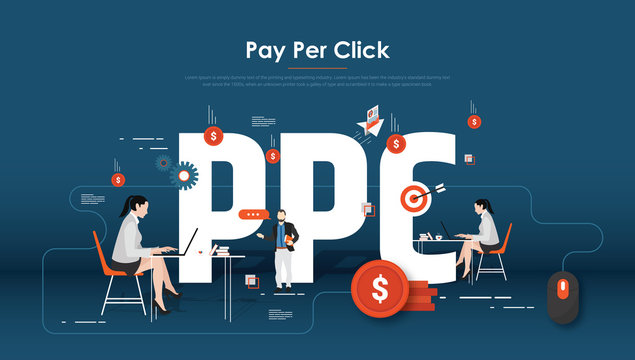
Building a PPC campaign that consistently delivers profitable results requires a structured approach. It begins with thorough keyword research that identifies not just the terms your target customers use but the intent behind those terms. Someone searching "digital marketing services Dubai" has a different intent and different potential value than someone searching "what is digital marketing." Your campaign architecture should reflect these distinctions precisely.
Ad copy development in 2026 requires a sophisticated understanding of both the platform's AI systems and human psychology. Responsive search ads allow the platform to test multiple combinations of headlines and descriptions, but the inputs must be crafted with a strategic purpose. Each headline should speak to a different customer motivation: urgency, value, credibility, and specificity. Lazy ad copy that could apply to any business in any industry generates mediocre results regardless of how well everything else is configured.
Landing page alignment is perhaps the most underappreciated element of PPC performance. The page a user lands on after clicking your ad should be a seamless continuation of the conversation that ad began. If your ad promises a free consultation for SEO services, the landing page should immediately confirm that offer, explain its value, and make the process of claiming it frictionlessly simple.
The Role of Data and Continuous Optimization
PPC advertising is not a set-and-forget system. The campaigns that deliver consistently strong results are those that are actively monitored, analyzed, and refined on an ongoing basis. This means regular review of search term reports to identify and exclude wasteful queries, systematic A/B testing of ad copy and landing page variations, bid adjustment based on device performance, geographic data, and time-of-day patterns, and ongoing competitive analysis to understand how the landscape is shifting.
In Dubai's competitive market, your competitors are investing in professional PPC management. The question is whether your campaigns are able to compete effectively for the same customers.
Why 2026 Is the Best Year to Get PPC Right
The UAE's digital advertising market continues to grow, with ad inventory becoming increasingly competitive. Businesses that invest in expert PPC management now are building campaign history, quality scores, and optimization data that will compound into lasting competitive advantage. Those who wait are entering an auction that gets more expensive every quarter.
For Dubai businesses that are serious about growth, partnering with an experienced PPC agency is not a cost. It is the mechanism by which your advertising budget is transformed from an expense into a reliably profitable investment.

Request a free quote
We offer Professional SEO services that help websites increase their organic search score drastically in order to compete for the highest rankings even when it comes to highly competitive keywords.
Contact now